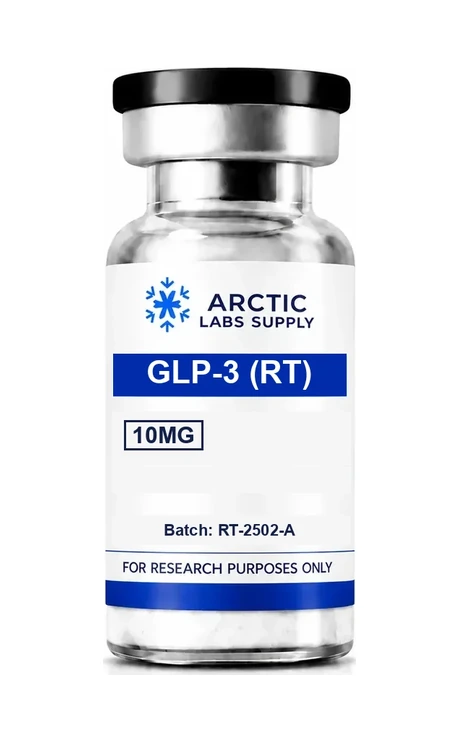
 Retatrutide 10mg$69.99Lot RT-2502-A · 99.83% HPLC · third-party report publishedView listing & add to cart
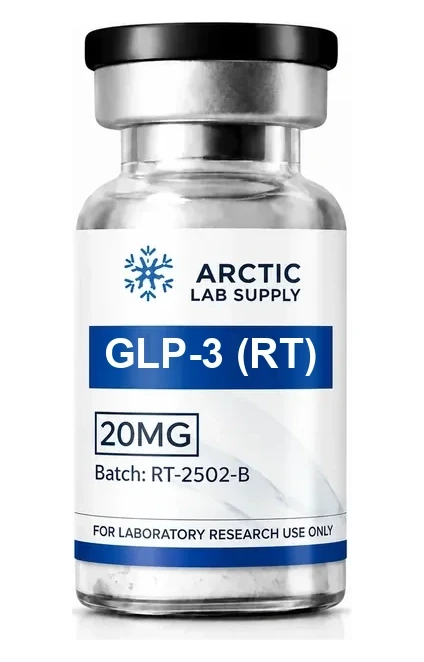 Retatrutide 20mg$119.99Lot RT-2502-B · 99.90% HPLC · third-party report publishedView listing & add to cart
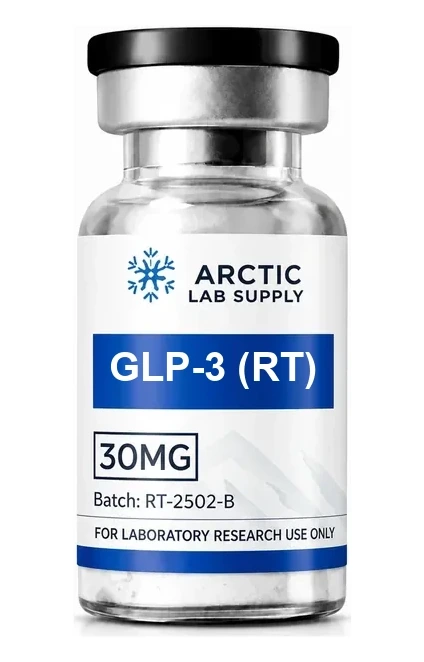 Retatrutide 30mg$164.99See listing for documentation statusView listing & add to cart
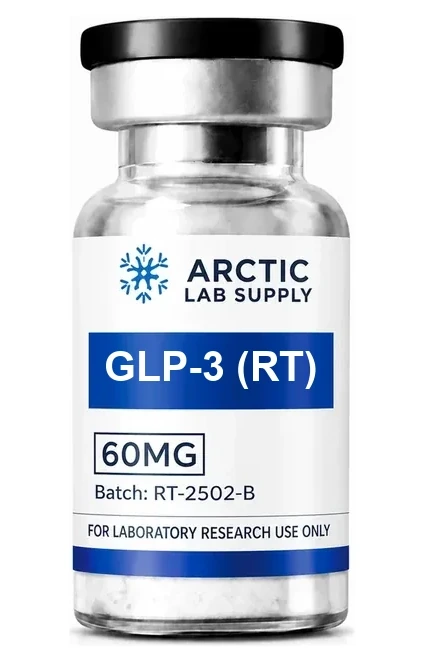 Retatrutide 60mg$249.99See listing for documentation statusView listing & add to cart
Identity
| Field | Value |
|---|---|
| Material | Retatrutide |
| CAS number | 2381089-83-2 |
| Molecular formula | — |
| Molecular weight | — |
| Form | Lyophilized powder in a sealed vial |
Retatrutide 10 mg is a synthetic peptide (CAS 2381089-83-2) supplied as a lyophilized powder in a sealed 10 mg vial, the smallest of four Retatrutide vial sizes.
Listings by strength
| Strength | Price | Batch documentation | Listing |
|---|---|---|---|
| 10mg | $69.99 | Lot RT-2502-A — 99.83% (HPLC), tested Aug 10, 2026 — batch report | Retatrutide 10mg |
| 20mg | $119.99 | Lot RT-2502-B — 99.90% (HPLC), tested Aug 27, 2026 — batch report | Retatrutide 20mg |
| 30mg | $164.99 | See listing for current status | Retatrutide 30mg |
| 60mg | $249.99 | See listing for current status | Retatrutide 60mg |
Published batch documentation
- Retatrutide 10mg — lot RT-2502-A: reported result 99.83% (HPLC), tested Aug 10, 2026, certificate COA-2026-6LOOFG, laboratory verification
- Retatrutide 20mg — lot RT-2502-B: reported result 99.90% (HPLC), tested Aug 27, 2026, certificate COA-2026-3WB8HV, laboratory verification
About this material
Retatrutide is the material name used on these listings. The pictured vial labels also use a shorthand name. This shorthand is not a substitute for the full material identity, nominal quantity and lot number when reviewing documentation.
The reports linked above describe the samples and analytical results identified in those reports. Their publication does not establish that every vial currently in stock belongs to the tested lot.
Choosing a nominal quantity
The 10 mg, 20 mg, 30 mg and 60 mg listings state nominal quantities, not different purity grades. A report for one quantity or lot must not be treated as evidence for another. Check the individual listing for documentation availability and contact support if the matching record is missing.
How to compare a vial with a report
- Read the material name, nominal quantity and lot number on the vial label.
- Compare those details with the sample identification in the report. If they do not match or the connection is unclear, request clarification before relying on the report.
- Review the test methods, results and limitations actually stated by the laboratory. A purity percentage alone does not establish identity, quantity or sterility.
- Use the issuing laboratory's verification service or contact the laboratory to confirm the report. A link alone does not establish authenticity.
Related reading
Common questions
- What does the shorthand on the pictured label mean?
- It is label shorthand for Retatrutide. Compare the full material identity, nominal quantity and lot with the applicable report; the shorthand alone does not verify the contents.
- Are the four nominal quantities different purity grades?
- The quantities listed are not purity grades. Evaluate only the analytical results documented for the matching sample and lot.
- Does one report cover all four quantities?
- No such coverage should be assumed. A report describes its identified sample and lot. A report for one quantity or lot does not automatically apply to another.
- How do I confirm a report is genuine?
- Use the issuing laboratory's verification service or contact the laboratory directly with the report identifier. An available PDF or verification link alone does not prove authenticity or connect current stock to the tested sample.
What a batch report does and does not establish
A published report describes one sample from one lot on one date under the stated method. It supports the identity and chromatographic purity result it lists. It does not describe other lots, and it says nothing about attributes that were not tested. Match the lot on the vial label to the lot on the report before relying on it (how to match a vial to its record).